

Time With Pain
How pain compresses time and reveals what endures.

This is a chapter excerpt from my series on time consciousness, for the second book in the Art of Seeing. Of everything I’ve written, this one sits closest to my own story. I hope it finds you where you are.
Pain alters time.
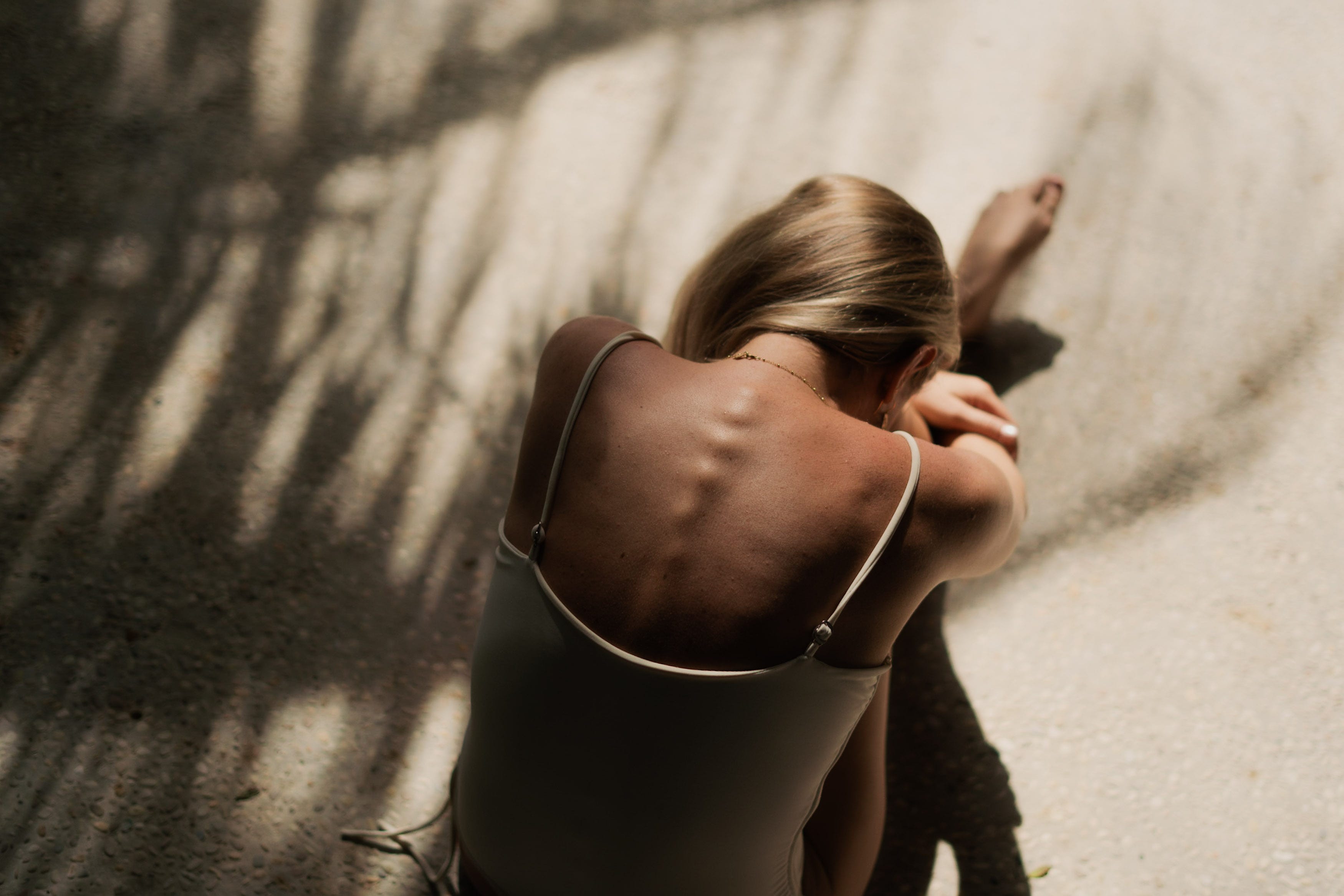
The day stops being measured in hours. It starts being measured in transitions: getting out of bed, standing upright, sitting down, turning over, putting on shoes, crossing a room. Each shift carries consequence. Each action gets weighed. Time becomes attention, and attention becomes effort.
A morning can turn into a project.
Rolling to one side. Finding a way to stand without setting off the nerve. Reaching the bathroom without losing balance. The smallest movement demands strategy.
When the body feels on fire, the mind stays locked in the present. Long-term plans thin out. Even tomorrow feels abstract. The nervous system pulls every resource into the now. The only question becomes what keeps the signal from amplifying.
This is what pain does. It compresses time. It edits what feels possible. It overrides language and starts making decisions from the red zone.
And still, something watches. A separate layer. A witness.
That layer rarely feels strong enough to change anything, yet it remembers that once there was a wider field of view. It remembers the sky.
What Pain Does to the Brain
Pain rewrites the hierarchy of needs. Survival moves to the top.
It shows up in moment-to-moment adjustments; only those who have lived it recognize. The nervous system treats physical danger and persistent inflammation the same way. It reacts. And reacts. And reacts.
Under sustained stress, the brain changes. The regions responsible for planning, imagination, and long-range thinking show reduced activity. ¹ Decisions that once took seconds now take hours.
Every choice carries weight because every choice costs energy. Booking a flight becomes unimaginable because the body has lost its ability to picture itself in transit.
The brain’s attention system begins to prioritize pain above everything else.² Pain wins the competition for focus. Curiosity fades. ³
Effort stops producing movement. Motivation thins as days blur together.
Catastrophic thinking moves in. This is neurochemistry, a physiological state.⁴
You can’t visualize your future because your system has stopped projecting one.
The very functions that support identity, hope, and becoming feel furthest away in the moments they are most needed. And still, some part of the psyche continues to search for meaning.
Chronic pain deepens this. Over time, the brain stops treating pain as a message and starts treating it as a condition. ⁵ ⁶ The signal endures. Perception, mood, attention, and time all shift to accommodate something that has lost its expiration date.
Pain is one form of constraint. Grief operates similarly. Chronic illness, extended caregiving, depression that reduces the world to what can be tolerated—the details differ, but the structure holds. ⁷
Stillness as Becoming
Becoming can look like stillness.
Becoming is the process through which identity evolves over time. Some seasons are defined by endurance. Some chapters measure growth by what it takes to hold steady. To be honest about pain. To stop forcing the old pace. To relate to life on different terms.
Some fires just burn.
Certain seasons ask for a pause on interpretation. They ask that duration be named. That experience be allowed to exist without immediate conversion into insight. That pain be given room to register without being rushed into meaning.
This is the work of honoring contraction.
The part of the arc where the nervous system asks for slower, smaller, closer—where the task becomes staying honest about what the body is actually saying, even when that honesty is inconvenient.
In these times, it becomes easier to see who depended on the appearance of wellness. Which relationships required constant strength as a condition of closeness. How much of what once looked like drive was actually momentum covering depletion.
Some lives will include visible comebacks. Others will live through winters without spring.
Dignity lives in how a person carries constraint. In how love continues when the body resists it. In how vulnerability is allowed. In how attention is chosen, even when that choice brings no visible reward.
When Perception Begins to Shift
As pain lingers, the horizon shortens. Expectation lowers as a form of self-protection. Hope begins to feel risky. Plans scale down. Imagination holds less distance.
Sometimes this narrowing is intelligence. A recalibration. Survival learns to move in smaller units of time: the hour, the afternoon, the day.
When a flare recedes, there is a small opening. Just enough to revisit the thoughts that formed inside the worst of it and ask whether they still belong outside that state.⁸
There is another task that feels almost unnatural: telling the body that what it perceives as threat is not, in fact, a threat. Sitting still while sensation spikes and refusing to interpret it as catastrophe. Relearning the difference between signal and story. Excavating the mind to loosen timelines shaped by fear. Fear of doors that closed while life moved in snail mode.
Pain tends to speak in absolutes. It loops toward worst outcomes. Over time, though, perception can recalibrate. There is often a lag between sensation changing and belief catching up.
Identity remains capable of change, even identity formed in the dark.
Versions of self form in pain. Those versions still belong. They still deserve care. They are whole drafts, written under harder conditions.
Time with pain is an opportunity to create differently.
An acknowledgment that inside constraint, choices remain—about pacing, boundaries, and which signals receive attention. Small choices that look like nothing from the outside and feel like everything from within.
When Time Keeps Its Own Pace
Some wounds resolve slowly or incompletely.
Some sensations stay. Some bodies recover along unexpected trajectories. Some relationships bend under the strain. Some mornings begin with the same ache they ended with.
Yet you are becoming.
Becoming is the willingness to remain in relationship with life—honestly, steadily, attentively—regardless of progress.
Living with pain means living without the performance of constant wellness. It means moving through a world built for speed while carrying what refuses to be hurried. It means learning how to hold a frame when a pose falls away.
Pain may teach, or it may simply reveal: edges, thresholds, the shape of love, the memories that stay close, the meanings that refuse to disappear.
Sometimes, becoming means nothing more than remaining.
The Days Without Metaphor
Some days offer no insight, no framing, no symbolism.
Just muscle spasm. The sting of inflammation. The heartbreak that stays sharp. The nervous system that struggles to stabilize. The language that slips away.
And still, a future arrives.
It may not resemble what was imagined. It still comes. And it is met, whether with softness, with ferocity, or with presence alone.
That is all that has ever been asked.
If you’ve lived through a season of constraint, whether pain, grief, caregiving, chronic illness, or the collapse of capacity, I’d be curious: what did you learn about time? About what it means to keep becoming when everything slows down?
Reply to this email or leave a comment below. I read everything.
Further Reading & Citations
1. Apkarian, A. V., et al. (2004). Chronic back pain is associated with decreased prefrontal and thalamic gray matter density. Journal of Neuroscience, 24(46), 10410–10415. [Shows chronic pain causes measurable brain atrophy in planning regions, linking to reduced future projection.]
2. Baliki, M. N., et al. (2008). Beyond feeling: Chronic pain hurts the brain, disrupting the default-mode network dynamics. Journal of Neuroscience, 28(6), 1398–1403. [Chronic pain disrupts DMN, impairing self-referential thought and mind-wandering into future/plans.]
3. Taylor, A. M., et al. (2016). Mesolimbic dopamine signaling in acute and chronic pain. Pain, 157(6), 1194–1208. [Pain quiets dopamine/reward pathways, causing anhedonia and flattened motivation.]
4. Sullivan, M. J. L., et al. (1995). The Pain Catastrophizing Scale: Development and validation. Psychological Assessment, 7(4), 524–532. [Catastrophizing as a neurochemical loop amplifying threat perception.]
5. Ji, R.-R., et al. (2018). Neuroinflammation and central sensitization in chronic and widespread pain. Anesthesiology, 129(2), 343–366. [Inflammation turns pain signals into persistent central states.]
6. Fiúza-Fernandes, F., et al. (2025). Brain network properties in chronic pain. Pain Reports. [Recent review: Pain alters global brain connectivity, prioritizing sensory over cognitive networks.]
7. Schulz, R., & Sherwood, P. R. (2008). Physical and mental health effects of family caregiving. American Journal of Nursing, 108(9), 23–27. [Caregiving mirrors pain’s time-compression effects on caregivers.]
8. Moseley, G. L., & Butler, D. S. (2015). Fifteen years of explaining pain. Journal of Pain, 16(9), 807–813. [Pain beliefs lag behind bodily recovery; perception can rewire post-flare.]
I’m proud of how far you’ve come, Anna. Your mental strength has overcome your physical limitations. You’ve got this.
I know what it feels like when time slows down. I experienced it during shock and grief, when pain consumed all my attention. Nothing else was strong enough to pull my focus away from it. As the days passed and I made a conscious effort to step back into life, becoming more open to experience again, time gradually began to move faster.
Now, I consciously choose to slow time down so I can be more present.
Oh Anna, this is a deeply moving read. Thank you for sharing your experience so elegantly and vulnerably. Warmest hugs